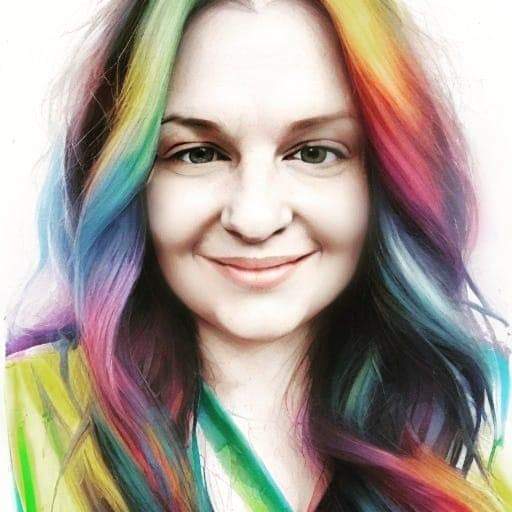
Anne spent most of her life feeling misunderstood until she was diagnosed with Autism later in life. Everything started to eventually make sense, even more so, when her family was all diagnosed with ASD and they begin this new journey together. She wants to write about all of this because sometimes one’s struggles are silent and only through efforts towards inclusion can we all be more comfortable to communicate our struggles. And as someone who is rejection sensitive, she often fails to communicate her struggles because she anticipates that her struggles will lead to further rejection and the cycle continues. She hopes that sharing her vulnerabilities leads to at least one person better understanding themselves or an Autistic loved one. She is looking forward to sharing more specifics about her struggles as a neurodiverse family residing in Pennsylvania.
View all postsThe Best Thing You’ve Ever Lost
Posted on
Often, I underestimate myself.
I blame at least some of that on the mountains of rejection I experienced while growing up undiagnosed with Autism and ADHD. For most of my life, I didn’t understand why certain things seemed harder for me than they were for everyone else. More importantly, the people around me didn’t understand either.
I truly believe that if I had been accommodated for the challenges I faced, I would have developed a much healthier perspective of myself. I don’t know if my circumstances or the overall trajectory of my life would have changed dramatically, but I do believe the validation would have changed my emotional health.
Sometimes I wonder what might have been different if the adults around me understood.
Had my mother known I had ADHD, would she have been so hard on me when I couldn’t sit still in church? If my struggles had been recognized as something other than disobedience or failure, would I have been punished so harshly for them?
If I had not been hit so often for the ways I failed to meet other people’s expectations as a child, maybe I would have recognized sooner that love was never supposed to hurt like that.
Instead, some of those patterns followed me into adulthood.
I tolerated emotional and physical abuse far longer than I should have because, somewhere along the way, I learned that love came with criticism, punishment, disappointment, and the constant expectation that I needed to become someone easier to deal with.
And that leads to the part I still struggle with the most: my perception of my own worth.
When I really reflect on who I am, it isn’t that I fundamentally believe I am unworthy of love. In fact, I would like to think I am pretty amazing.
I am two years away from earning my doctorate, and I have maintained a 4.0 GPA. I volunteer as a board member for a nonprofit organization supporting neurodivergent children and families. I work a full-time job alongside several part-time jobs. I have carried my family financially on my own income for two decades.
I am driven. I am loyal. I care deeply. I work incredibly hard for the people and things that matter to me.
And yet, cue the inner monologue.
Apparently, I am impossible to love.
I am too emotional. Too overwhelming. Too driven. Too focused on perfection. My standards are supposedly too high. I expect too much.
But lately, I have started questioning that narrative.
Is it really too much to ask for equitable love? Is it wrong to want more than the minimum effort?
Because what I want has never been especially complicated. I want emotional connection and investment. I want to know if the person who says he loves me actually cares about what happens inside my heart and my head. I want his actions to make that care recognizable and genuine.
It isn’t about money. It isn’t about sex. It isn’t about grand gestures or some impossible romantic fantasy.
It is about showing up. It is being vulnerable enough to communicate. Being willing to invest emotionally. Paying attention. Offering reassurance without making someone beg for it. Loving another person without constantly attaching conditions to that love.
Maybe my standards are high. Or perhaps they only seem high to people who benefit from me having none.
I have spent too much of my life believing that being loved required me to shrink myself, soften my needs, tolerate things that hurt me, and accept whatever someone was willing to give.
I don’t want to do that anymore.
I am learning that recognizing my own worth means accepting that not everyone will be capable of loving me in the way I deserve. That realization still hurts, especially when I desperately want a particular person to be capable of it.
But losing someone who refuses to meet you with the same vulnerability, care, and investment you offer them is not necessarily your loss.
Sometimes, the real loss belongs to the person who failed to recognize your worth, while they still had the chance to love you. And one day, they may finally realize that you were the best thing they’ve ever lost.
Anne Brown