Rachel is a Jewish bisexual autistic woman (she/her) with ADHD in her twenties. She loves writing and can always be found with her nose in a book! Her plan for the future is to earn her Psy. D. in clinical psychology. This interested in psychology started as a way to help her understand people better and to figure out what it was about others I kept not getting. It is also something deeply linked with her self-advocacy. There is a gap in communication between the autistic community and providers, and she want to help bridge it and challenge others to see things from different perspectives.
View all postsOnline Dating with Autism
Posted on
I’ve been thinking about trying to date again. The keyword for me here is “try.” Historically, my attempts to “put myself out there” have been awkward, brief, and ended in disappointment. My most successful relationship ever, even that only a tentative thing we were both hesitant to label, came from developing mutual feelings for an online friend, not from seeking it out on dating apps. Still, meeting people the old-fashioned way rarely works out for me. It’s not hard for me to develop feelings for someone, but those feelings don’t often seem to be returned.
As much as I would love for fate to intervene on my behalf in the form of some meet-cute with an attractive stranger, it hasn’t happened yet. Sitting around waiting for it to happen clearly isn’t the winning strategy here.
I try going to social events to meet new people, but it’s hard enough to make new friends at these events. Let alone find a future romantic partner. Making friends as an adult isn’t easy for anyone, so it shouldn’t be surprising if it’s even harder for me.
Over and over again, I find myself standing at the periphery of a group, other people making connections while I get left behind. If I try too hard, I risk being seen as pushy or off-putting. If I don’t try enough, people assume I’m not interested in befriending them.
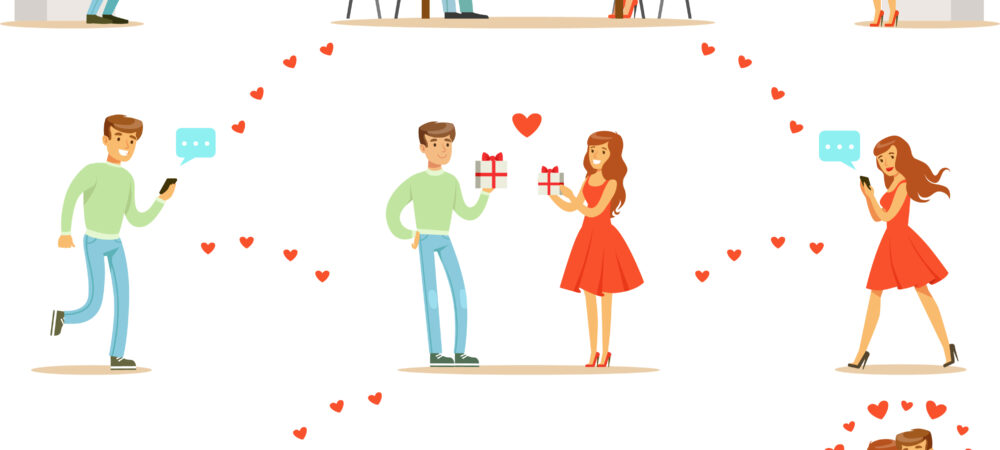
Compared to that, you would think online dating should be a bluntly straightforward breath of fresh air. It’s an environment where expectations are understood, the goal is clear, and everyone is there for roughly the same reason. Yet it doesn’t feel like any of those things.
Every time I’ve tried online dating, I’m usually running for the hills again in less than a month. Maybe with one unsuccessful date under my belt, if I’ve been lucky. The whole experience often feels unpleasant, stressful, and thoroughly draining. I keep getting drawn back to it, thinking this time it should be different, only to get disappointed once again. I know I’m not the only one emerging from the online dating mines with such bad experiences, so I don’t think it’s just about me and what I might be doing wrong.
Part of it is the forced, stilted nature of interactions. It’s hard to be natural with people when you’re both sizing each other up to some extent. Waiting to see if some spark of chemistry, some sense of connection, will appear. Even if I do find a good rapport with someone over text, things often feel a lot more awkward once we meet up in person.
And then there’s the constant expectation of availability. I don’t want to spend my time constantly tied to my phone, checking and responding to messages. But the threat of being ghosted leaves people on edge and anxious for a response. Not that I really blame people for being worried about ghosting; it happens a lot. Or for ghosting either; I’ve done it too, even if I’m not proud of it. It feels hard to tell a stranger, “Hey, there’s nothing wrong with you, but I’m not interested.” Especially when not everyone will take that well.
The overall vibe makes every interaction feel like walking a precarious tightrope, where every response and lack of response is judged. Maybe I’m too concerned with wanting strangers to like me, but in this case wanting the other person to like you seems only natural. Either way, it’s gotten to the point where the thought of setting up another online dating profile feels equal parts exhausting and anxiety-inducing.
Recently, I’ve gotten the idea to try speed dating. Online speed dating, that is. It’s easier than in-person speed dating, and I have a better chance of meeting someone I might find a match with when everything is prearranged based on preferences. A few weeks back, I went to my first one. It went ok, or at least not badly enough to scare me away. I’ll try going to a few more sessions if I can make the time.
Still, part of me wonders if this will also be doomed to end in the same fruitless cycle as the rest of my online dating attempts. If I’ll get tired of people who match with everyone but ghost you since they were never interested or find myself chafing under the endless small talk. Or be the one ghosting people because of said endless small talk. And then feel bad for said ghosting. If I’ll once again push myself too hard to give a chance to people I have no chemistry with just because they seem nice. And then wonder if I’m too picky when I can’t get myself to like them more.
With all this stress, you may wonder why I keep trying. Even if the slow path of meeting someone by chance rarely seems to work for me, isn’t it better to let fate take its course rather than keep doing things that only seem to cause me stress?
But when I’ve made it to 30 with little luck in love to show for it, it’s easy to start wondering if there’s something wrong with me. Other people seem to find their romantic partners so simply and easily. Yet that connection frequently eludes me. So many other people my age and younger are in relationships or married. Many others who aren’t are single by choice rather than lack of options. It becomes easy to conclude that there is something about me that is simply undesirable. It makes me feel broken.
That’s not a good reason to seek out a romantic relationship, but it’s hard to deny the pull of the desire to feel wanted. To feel special to someone, and not just because of longstanding connections like family. To be special because someone wants me.
As a disabled woman, imagining myself as the object of someone else’s desire has never been easy. People who get romantic love in media don’t look like me, and they don’t act like me. Society is quick to infantilize or erase me, and so romance and desire seem to belong to another world that I am not a part of. Maybe that lack of belief in my own desirability has caused me to get in my own way. Maybe I’ve overlooked countless signs of another’s interest. It’s impossible for me to know.
They say you need to love yourself to love another person and be loved by them in return. But it can be hard to keep loving yourself when it seems as if so many people have judged you unworthy of love. When you watch so many others achieve what keeps slipping out of your reach. At a certain point, it feels like you must be the problem. Like I must be the problem.
I’ve been gripped by the fear that I might never find love. Maybe it sounds silly, when 30 isn’t even that old. Yet I worry the years will slip away from me, and I’ll have spent my whole life waiting for someone else to share it with. Someone who never appeared.
So, I keep throwing myself into online dating again and again, the same stress and exhaustion chasing me back out each time. I don’t know what else to do.
The answer is probably to find happiness in being single first. And the thing is, it’s not like I’m unhappy being single. I enjoy being able to go at my own pace, not having to worry about another person’s needs or schedule. I enjoy having space to decompress away from others. I enjoy just being able to do whatever I want whenever I want.
Even so, it would be nice to have a partner. I don’t need to find them right now, or this year, or even the next. I just want to know that I’ll find them someday. My fear that I won’t probably speaks to a lot of deep insecurities that I still need to work through, insecurities that having a romantic partner won’t solve. But that doesn’t change my desire for one either.
I don’t think I should make romance such a torturous experience for myself. It’s just that sometimes the line between “getting out of my comfort zone” or “putting myself out there” vs putting myself through unnecessary and unproductive stress isn’t a clear one.
I want to believe I’ll find the right person one day. Don’t we all? I just wish I knew where to look.